Learning How to Learn: Master Any Skill Faster
·
Updated: January 27, 2026
·8 min read
Three years ago, I decided to learn Spanish.
I downloaded Duolingo, watched Netflix shows with subtitles, and read articles about language learning. Six months later, I could barely order coffee in Mexico City.
What went wrong? I was consuming Spanish, but I wasn't actually learning it.
The difference matters. Most of us were taught that learning means reading, highlighting, and re-reading. But cognitive science has shown something different: learning how to learn is a skill—and most of us never learned it.
Once I discovered the right methods, everything changed. I picked up SQL in three weeks. I finally understood statistics. I even started writing in a new language.
Let me show you the four pillars that make the difference.

10-Minute Micro-Routine:
That discomfort is productive struggle. Start with mini recall (3 questions). Celebrate the checkmark, not perfection. "I forget to review."
Tie spaced reviews to a daily anchor (after lunch). Use a recurring calendar reminder. Keep your deck under 10 minutes per day to stay consistent. "I'm practicing, but progress is slow."
Narrow the target and add feedback. For writing, practice only openings for a week. For coding, solve the same function in three ways. "I can't focus long enough."
Start with one 25-minute block and eliminate a single distraction. For more strategies, see How to Deep Work and Focus. "Motivation fades after a few days."
Focus on floors, not ceilings. A 10-minute recall session counts. Momentum beats intensity. To strengthen consistency, layer in tactics from How to Master Habit Formation.
Yes—by learning better. Retrieval + spacing reduce total hours while increasing retention. You trade passive time for a few minutes of focused effort daily. Which app is best?
The best tool is the one you'll use. Flashcards in Anki or paper both work. Notes in Obsidian, Notion, or plain text all work. Pick one and stick to it for a month. How soon will I see results?
Often in 1-2 weeks. You'll feel recall getting easier and see fewer blank moments. Keep sessions short and regular. How do I fit this into real life?
Protect one starter block on your calendar and build around it. Weekly planning helps—see How to Organize Your Week.
What "Learning How to Learn" Really Means
Most learners do the opposite of what works. We reread, highlight, and binge-watch tutorials—then wonder why nothing sticks. Effective learning is active, spaced, and focused. That means you:- Pull information from memory (active recall)
- Revisit it on a schedule that fights forgetting (spaced repetition)
- Practice at the edge of your ability (deliberate practice)
- Build notes you can reuse (note-making)
Pillar 1: Active Recall
Active recall means quizzing yourself instead of rereading. Close the book. Ask, "What were the three main ideas?" Explain them in your own words. Check, correct, repeat. It feels harder than rereading—that's the point. The effort of retrieval strengthens memory more than passive review. How to do it today:- Turn headings into questions. Before a chapter, list 3-5 questions. After reading, answer from memory.
- Use flashcards (paper or app). One idea per card. Keep answers short enough to say in under 10 seconds.
- Teach someone. Record a one-minute audio clip explaining the concept without notes.
| Habit | Feels easy? | Builds memory? | When to use |
|---|---|---|---|
| Rereading/highlighting | Yes | Weak | Quick skim before a new unit |
| Active recall | No (productive struggle) | Strong | Daily questions, flashcards, teach-back |
- Pick one subtopic.
- Write 5 questions.
- Answer out loud from memory.
- Check and mark what to review tomorrow.
Pillar 2: Spaced Repetition
We forget quickly unless we space our reviews. Spaced repetition means revisiting material at increasing intervals—hours, days, then weeks. Each time you retrieve successfully, the memory trace strengthens and the next review can be later, saving time without sacrificing retention. How to do it today:- Use an SRS app (e.g., Anki) or a simple calendar. Review new ideas the next day, then 3 days, 1 week, 2 weeks, and 1 month later.
- Keep cards small and precise. If a card takes longer than 10 seconds to answer, split it.
- Mix topics (interleaving). Review items from topic A, then B, then A again. Mixed practice builds flexible knowledge.
- D0 learn → D1 review → D3 review → D7 review → D14 review → D30 review.
Pillar 3: Deliberate Practice
Not all practice is equal. Deliberate practice is practicing just beyond your current ability with feedback and clear goals. It's structured, focused, and uncomfortable in a good way. How to do it today:- Break the skill into parts. For writing, separate headlines, openings, transitions, and edits.
- Define a target for the session. "Write 3 headlines that hit a clear promise" beats "work on the blog."
- Use a checklist and timer. One 25-minute block on a single sub-skill is better than an hour of vague effort.
- Get feedback fast. Use a rubric, a peer, or a mentor. Then adjust immediately.
- Set a narrow target ("write 150 words with one claim + one example").
- Time-box 25 minutes.
- Compare to your rubric; fix one thing.
- Log a note: what improved, what to try next time.
Pillar 4: Smart Note-Making
Most people "take" notes; effective learners make notes. Instead of copying the author, you rephrase, connect, and simplify. Notes should be useful later—for writing, presentations, flashcards, and decisions. Three practical formats:- Cornell notes for structured study. Split the page: cues/questions on the left, notes on the right, summary at the bottom.
- Mind maps for complex topics. Put the main idea in the center; branch out with verbs, not nouns.
- Atomic notes. One idea per note, with a short title that starts with a verb ("Explain X," "Compare Y vs Z"). Link related notes.
- Title with verbs: "Explain gradient descent" beats "ML notes 3."
- Add a 1-3 line TL;DR at the top.
- Tag for process:
#draft,#ready,#to-quiz.
- Turn key notes into flashcards the same day you write them.
- Add a teach-back prompt: "Explain this to a 12-year-old."
- Mark cards as easy/hard to guide your next deliberate practice block.
Connect Methods to Your Week
Great methods fail without a rhythm. A light planning cadence ensures your learning happens even when life is messy. Weekly scaffolding:- Pick one primary topic (e.g., Python basics) and one secondary (e.g., SQL review).
- Define your Big-3 lead metrics (e.g., "3 recall blocks," "3 deliberate practice sessions," "30 flashcards/day").
- Block two deep-work sessions on your calendar; keep them short but sacred.
- Keep a visible scoreboard with checkmarks only—no guilt, just data.
- Recall (10-15 min): Yesterday's questions or flashcards.
- Deliberate practice (20-30 min): One sub-skill, one timer, one target.
- Note-making (5-10 min): TL;DR + one new card.
- Plan tomorrow (2 min): Write the first question you'll answer next time.
A 7-Day Starter Plan
Day 1: Setup
- Choose a topic and list 10 sub-skills.
- Write 10 recall questions.
- Schedule two 25-minute blocks on your calendar.
Day 2: First Reps
- Run one recall block.
- Build 10 flashcards (one idea each).
- Write a 3-line summary of what clicked.
Day 3: Spacing
- Review new cards (D1) and add interleaving—mix in 3 cards from an older topic.
- Do one deliberate practice block with a tight target.
Day 4: Teach-Back
- Record a 60-second explanation of a tough idea.
- Convert the explanation into two atomic notes + two new cards.
Day 5: Feedback
- Ask a friend/mentor for quick feedback on a tiny artifact.
- Log one improvement for your next session.
Day 6: Consolidate
- Spaced review (D3 or D7 items).
- One light practice block (busy day? do the floor).
Day 7: Mini-Retro
- What worked? What got in the way? What will you change next week?
- Keep the same plan or adjust your floors/ceilings.
Troubleshooting Common Problems
"I keep rereading because recall feels hard."That discomfort is productive struggle. Start with mini recall (3 questions). Celebrate the checkmark, not perfection. "I forget to review."
Tie spaced reviews to a daily anchor (after lunch). Use a recurring calendar reminder. Keep your deck under 10 minutes per day to stay consistent. "I'm practicing, but progress is slow."
Narrow the target and add feedback. For writing, practice only openings for a week. For coding, solve the same function in three ways. "I can't focus long enough."
Start with one 25-minute block and eliminate a single distraction. For more strategies, see How to Deep Work and Focus. "Motivation fades after a few days."
Focus on floors, not ceilings. A 10-minute recall session counts. Momentum beats intensity. To strengthen consistency, layer in tactics from How to Master Habit Formation.
Design Your Floors and Ceilings
Floors keep you consistent on busy days; ceilings keep you from overdoing it when you're excited.- Recall: Floor = 10 minutes/day; Ceiling = 30 minutes/day.
- Cards: Floor = 10 new cards/week; Ceiling = 30 new cards/week.
- Deliberate practice: Floor = 2 blocks/week; Ceiling = 5 blocks/week.
- Teach-back: Floor = 1 per week; Ceiling = 3 per week.
Frequently Asked Questions
Is it really possible to learn faster?Yes—by learning better. Retrieval + spacing reduce total hours while increasing retention. You trade passive time for a few minutes of focused effort daily. Which app is best?
The best tool is the one you'll use. Flashcards in Anki or paper both work. Notes in Obsidian, Notion, or plain text all work. Pick one and stick to it for a month. How soon will I see results?
Often in 1-2 weeks. You'll feel recall getting easier and see fewer blank moments. Keep sessions short and regular. How do I fit this into real life?
Protect one starter block on your calendar and build around it. Weekly planning helps—see How to Organize Your Week.
Start Today
Here's your challenge:- Choose one topic and list ten questions you want to answer from memory.
- Schedule one 25-minute block tomorrow.
- After the block, write a 3-line TL;DR and create two flashcards.
- Add D1, D3, D7 reviews to your calendar.
- Record a 60-second teach-back at the end of the week.
Was this article helpful?
Related Posts

Mindset· 11 min
How to Use Active Recall in 10 Minutes
Master active recall—the most effective learning technique backed by science. Set up a simple 10-minute system to remember anything permanently.
Read

AI & Tech· 8 min
When Not to Use AI: 5 Tasks I Now Do Manually on Purpose
AI can do almost everything for you. That's exactly the problem. Five tasks I now keep manual—not out of nostalgia, but because outsourcing them costs more than it saves.
Read
Mindset· 8 min
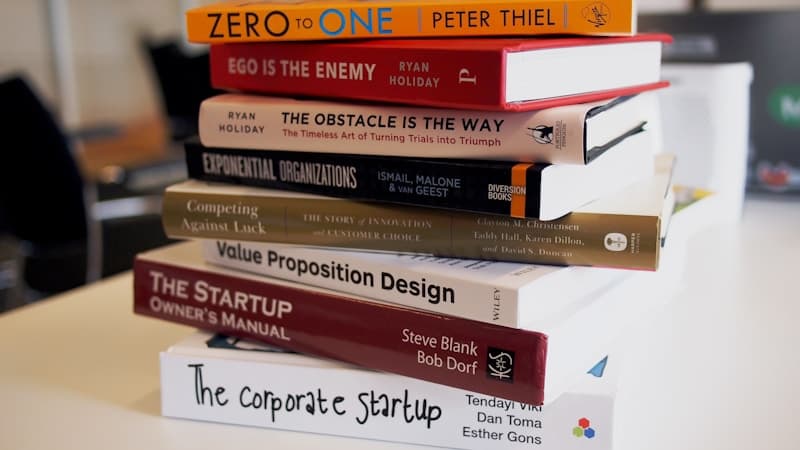
7 Books That Permanently Changed How I Think and Work
Not a reading list—these are the 7 books that rewired how I approach decisions, habits, focus, and learning. Each one left a permanent mark on my daily behavior.
Read

Mindset· 9 min
How to Build Keystone Habits That Transform Your Day
Discover keystone habits—small actions that trigger positive chain reactions. Learn habit stacking to turn good intentions into automatic daily wins.
Read
Explore more topics: