How to Build Measurable Progress in Personal Development

Three years ago, my friend Marcus sat across from me at a coffee shop, frustrated. He wanted to grow but didn't know how to create a personal development plan that would actually stick.
"I want to get better at so many things," he said. "Learn Spanish. Get in shape. Build a side project. Read more. But I start strong, then it all falls apart within a week."
I recognized the pattern immediately. I'd done the same thing countless times.

"Let me guess," I said. "You set big goals, go all in, then life gets busy and you quit?"
He nodded. "Every single time."
That conversation changed everything. Marcus decided to create a personal development plan that actually worked—not a vision board or massive goal list, but a simple one-page system he could follow even on his worst days.
Eighteen months later, he'd published 12 articles, lost 15 pounds, and built a side project that brought in his first $500. Not because he suddenly became more disciplined. Because he built a better personal development plan.
Why Most Personal Development Plans Fail
Here's what typically happens when someone decides to "work on themselves."
Step 1: Get inspired. Read a book, watch a TED talk, feel motivated.
Step 2: Set ambitious goals. "I'll work out 6 days a week! Write 1000 words daily! Learn coding!"
Step 3: Start strong. For exactly 4-7 days.
Step 4: Life happens. Work gets busy. You get sick. A project runs late.
Step 5: Miss one day. Then two. Then quit entirely.
Step 6: Feel guilty and defeated. Tell yourself you lack discipline.
Marcus had done this cycle at least a dozen times. The problem wasn't his motivation or willpower. The problem was his personal development plan—or lack of a real system.
He was trying to change everything at once. His goals were vague. He had no way to track progress. And when he missed a day, he felt like the whole plan was ruined.
The Four Principles of a Personal Development Plan That Works
After Marcus's coffee shop confession, I showed him a framework I'd learned from habit research and personal experience. It's built on four principles:
1. Clarity: One Target, One Daily Action
Instead of "I want to be healthier," Marcus wrote: "Walk 120 kilometers total in 90 days."
Instead of "I should write more," he wrote: "Publish 8 articles in 90 days."
The daily action was even simpler: "Walk for 20 minutes" and "Write for 25 minutes."
That's it. One clear outcome. One daily input.
2. Friction: Make It Ridiculously Easy
Marcus's biggest insight: "I wasn't lazy. My environment was working against me."
Before, he'd tell himself to "go for a run." But his running shoes were in the closet, he didn't have a route planned, and he'd waste 15 minutes deciding where to go.
Now? He put his walking shoes by the door every night. He saved three routes in his maps app. The decision was already made.
For writing, he opened his document the night before with a one-sentence prompt: "Write about the time when..."
No friction. No decisions. Just start.
3. Feedback: Track Daily, Review Weekly
Marcus bought a simple wall calendar. Every day he completed his 20-minute walk, he put an X on that date. Every day he wrote for 25 minutes, he added a checkmark.
That's it. Two marks per day maximum.
"Seeing the chain of X's made me not want to break it," he explained. "And on tough days, I could look back and see I'd already done it 30 times. That proof kept me going."
Every Sunday, he spent 15 minutes reviewing:
- What worked this week?
- Where did I feel friction?
- What's one thing I can ship next week?
- Do I need to adjust anything?
These four questions kept his system evolving instead of dying.
4. Cadence: Never Zero
The most powerful rule Marcus adopted: "Never miss twice."
Bad day? Do five minutes instead of 25. That still counts.
Sick? Take a 10-minute walk around the block. Chain unbroken.
The goal wasn't perfection. It was consistency.
"I used to think if I couldn't do the full workout, I shouldn't do anything," Marcus said. "Now I know that five minutes of writing beats zero minutes. Always."
The One-Page Personal Development Plan Template
Every effective personal development plan should fit on one page. Here's the exact template Marcus used (and still uses today):
SECTION 1: THE OUTCOME (90 Days)
What specific result do I want?
Examples:
- "Publish 8 articles"
- "Walk 120 km total"
- "Ship a portfolio refresh"
- "Complete 30 coding exercises"
Make it measurable. Make it meaningful. Make it one thing.
SECTION 2: THE DAILY INPUT
What's the smallest action that guarantees progress?
Examples:
- "Write for 25 minutes before 9 AM"
- "Walk for 20 minutes after lunch"
- "Practice 10 flashcards"
- "Code for 30 minutes"
If you do this input every day, progress is automatic. No debate needed.
SECTION 3: ENVIRONMENT DESIGN
What makes the daily input easy?
Marcus's examples:
- "Phone in another room"
- "Shoes by the door"
- "Document open with first sentence written"
- "Calendar block with Do Not Disturb"
SECTION 4: THE THREE METRICS
Marcus tracked only three numbers:
1. Sessions per week (target: 5)
How many days did you complete your daily input? Don't count perfection, count completion.
2. Friction removed per week (target: 1)
Each Friday, what's one thing you'll change to make next week easier?
3. Micro-outputs per week (target: 1-3)
What small, shippable thing did you create? A paragraph. A sketch. A demo. Proof of movement.
💡 Side note: Just like personal systems need regular optimization, businesses need smart automation to stay efficient. If you're spending too much time on repetitive tasks, see how AI can help.
SECTION 5: RISKS & RESPONSES
What could derail me, and what's my pre-planned response?
Marcus's list:
- Risk: "Miss a morning walk" → Response: "10-minute evening walk minimum"
- Risk: "Too tired to write" → Response: "Just write one bad sentence"
- Risk: "Traveling for work" → Response: "Write in the airport for 15 minutes"
Having these responses written down eliminated decision fatigue when life got messy.
SECTION 6: WEEKLY REVIEW QUESTIONS
Every Sunday, 15 minutes:
- What worked?
- Where was friction?
- What will I ship next week?
- Do I need to adjust the daily input?
How Marcus Built His First Personal Development Plan (30 Days)
Here's exactly how Marcus structured his first month with his personal development plan:
Week 1: Clarity & Setup
Monday: Filled out the one-page template. Chose outcome: "Publish 8 articles in 90 days." Daily input: "Write for 25 minutes before 9 AM."
Tuesday: Completed first 25-minute session. Put phone in another room. Wrote 300 words.
Wednesday: Second session. Prepared document the night before with opening sentence.
Thursday: Third session. Added walking shoes by door for new habit.
Friday: Fourth session. Removed first friction: moved charger out of bedroom so phone stays in kitchen.
Weekend: Did 5-minute minimum on Saturday (travel day). Sunday: first weekly review.
Key lesson: "I focused on showing up, not on being perfect. Four sessions in week one felt like a huge win."
Week 2: Friction Hunt
Marcus's goal: find and remove one source of friction.
He noticed he wasted 10 minutes every morning deciding what to write about. So he started a "writing prompts" document with 20 ideas. Each night, he'd copy one prompt into tomorrow's document.
Result: He completed 5 sessions in week two (his target). Progress accelerated.
Week 3: Micro-Outputs
Instead of just writing, Marcus committed to shipping something small every week.
Week 3 output: Published his first article. Just 600 words. Imperfect. But shipped.
"That article changed everything," he said. "I had proof I could finish something. It wasn't theoretical anymore."
Week 4: Cadence & Confidence
By week four, the system felt natural. Marcus completed 6 sessions (his best week yet).
He added one stretch: shared his writing with three friends for feedback.
End of month stats:
- 20 sessions completed (out of 28 possible days)
- 4 friction points removed
- 2 articles published
- 0 days where he quit entirely
The Psychology Behind Why This Works
Marcus's success wasn't luck. It was design. The plan leveraged two powerful psychological principles:
Implementation Intentions
Research shows that people who use "If X, then Y" statements are 2-3x more likely to follow through.
Marcus's version: "If it's 8:45 AM, after I pour coffee, then I will open my document and write one sentence for 25 minutes."
No decision required. The plan is pre-made.
The Progress Principle
Harvard research found that "making progress in meaningful work" is the #1 factor in daily motivation—more than recognition, pay, or clear goals.
Marcus's wall calendar provided visible, daily progress. Every X was proof he was moving forward.
"On tough days, I'd look at the calendar and think, 'I've done this 47 times already. I can do it one more time,'" he said.
⚡ Pro tip: Systems compound over time—both for personal growth and business growth. If your business processes feel manual and time-consuming, explore AI automation to free up your time.
Common Mistakes (And How to Avoid Them)
After helping five more friends build their own plans, Marcus identified the patterns of failure:
Mistake #1: Starting Too Big
Wrong: "I'll write for 2 hours every morning!"
Right: "I'll write for 15 minutes before checking email."
If the input feels easy, you're more likely to start. You can always go longer once you've started.
Mistake #2: Vague Goals
Wrong: "I want to be more creative."
Right: "I'll sketch one thing every day for 30 days."
You can't track vague. Make it concrete.
Mistake #3: Tool Chasing
Marcus's friend bought a $200 productivity app, spent a week configuring it, then abandoned it.
"Use whatever you'll actually open," Marcus advises. "I used a $3 wall calendar for 6 months. It worked perfectly."
Mistake #4: All-or-Nothing Thinking
Wrong: "I missed today, so the whole plan is ruined."
Right: "I missed today. I'll do 5 minutes tomorrow. Never miss twice."
Perfection is the enemy of consistency.
Mistake #5: Skipping Weekly Reviews
The review is where learning happens. Without it, you're just repeating actions without improving the system.
Marcus blocked 30 minutes every Sunday morning. "That's when I figured out what was working and what needed to change."
Real Results: 18 Months Later
By the time Marcus and I met for coffee again, 18 months had passed.
His results:
- Writing: 32 articles published (original goal: 8)
- Fitness: 480 km walked, lost 15 pounds
- Side project: Built and launched, first $500 earned
- Learning: Completed 120 coding exercises, built 3 small apps
"The crazy thing," Marcus said, "is that I'm not doing anything heroic. I'm just showing up for 20-30 minutes a day. But it compounds."
He still uses the same one-page template. Still tracks with a wall calendar. Still does his Sunday review.
"I used to think personal development required massive life overhauls," he said. "Now I know it just requires a better system."
Your 7-Day Starter Plan
Want to start like Marcus did? Use this first-week blueprint:
Day 1: Fill out your one-page template. Pick one 90-day outcome and one daily input. Do your first session today.
Day 2: Complete session #2. Remove one friction (put phone elsewhere, prep materials the night before).
Day 3: Complete session #3. Tell one person about your plan for light accountability.
Day 4: Complete session #4. Ship a micro-output (one paragraph, one outline, one sketch).
Day 5: Complete session #5. Remove another friction (script your first 90 seconds).
Day 6: Do your minimum (5 minutes counts). Write a three-line summary of progress.
Day 7: Weekly review (15-30 minutes). Answer the four questions. Plan next week.
If you complete even 5 out of 7 sessions, you're ahead of 90% of people who "plan to start someday."
The Three Numbers That Matter
Don't overcomplicate tracking. Marcus monitored just three metrics:
1. Sessions completed per week (target: 5)
Count how many days you did your daily input. That's it.
2. Friction removed per week (target: 1)
Every Friday, identify one thing making it harder. Fix it before Monday.
3. Micro-outputs per week (target: 1-3)
What did you ship? A paragraph. A workout logged. A page edited. Proof you're progressing.
If sessions drop: shrink your daily input.
If friction stays high: fix the biggest blocker first.
If outputs flatline: make deliverables smaller.
The system adjusts to you.
Start Today, Not Monday
Marcus's final advice: "Don't wait for the perfect Monday. Start today with something tiny."
Open a document right now. Write these three lines:
- My 90-day outcome: _____
- My daily input: _____
- Today's session: _____ (mark when done)
That's your system. Simple, clear, actionable.
Set a timer for 5 minutes. Do the first tiny version of your daily input.
You don't need motivation to start. You need motion. And motion creates momentum.
"I wasted years waiting to feel ready," Marcus told me. "The truth is, a good personal development plan makes you ready. You become ready by starting before you're ready."
Your first session won't be perfect. That's fine. Perfect isn't the goal. Progress is.
Want to place your daily sessions into a complete weekly structure? Check out How to Organize Your Week for a practical framework. To turn your decisions and experiments into learning, keep a simple Decision Journal alongside your development plan.
💡 Running a Business? Automate the Repetitive Work
Just like personal development systems free up your mental energy, business automation frees up your team's time. Our AI solutions handle customer inquiries 24/7, schedule appointments automatically, and reduce manual workload by 60%.
✅ 24/7 customer support | ✅ Automated scheduling | ✅ 45% more bookings
Was this article helpful?
Related Posts
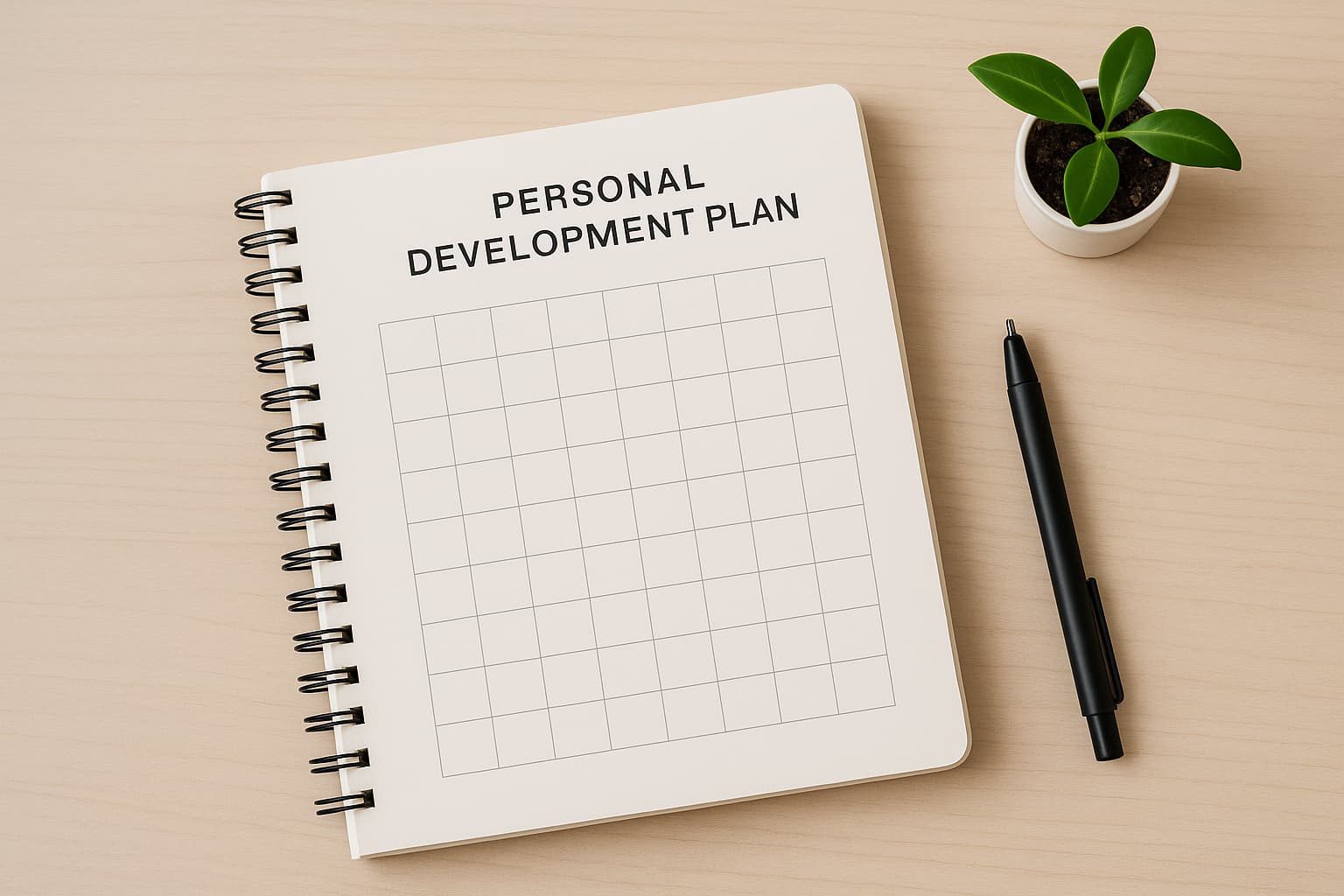
How to Create a Personal Development Plan: 30-Day Guide
Create a personal development plan that actually works. Step-by-step 30-day guide with templates, tracking metrics, and real examples to transform your goals into daily habits.
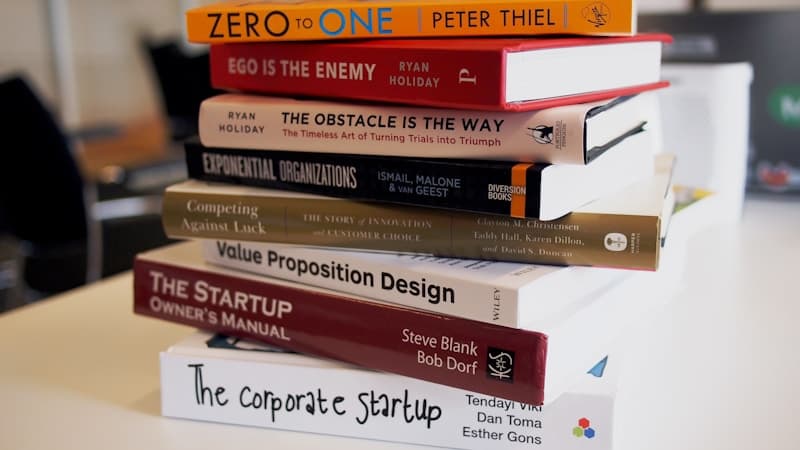
7 Books That Permanently Changed How I Think and Work
Not a reading list—these are the 7 books that rewired how I approach decisions, habits, focus, and learning. Each one left a permanent mark on my daily behavior.
How to Develop a Growth Mindset in Practice
Learn how to build a growth mindset that turns setbacks into stepping stones. Practical exercises to catch fixed thinking and take action today.

How to Build Keystone Habits That Transform Your Day
Discover keystone habits—small actions that trigger positive chain reactions. Learn habit stacking to turn good intentions into automatic daily wins.
Explore more topics: